If there’s one thing in photography that grinds my gears it is “rules”. You’ll already have anticipated this, but the biggest bugbear for me is the Rule Of Thirds. It perfectly illustrates the “camera-clubby”, mechanical-approach-to-creativity hell that we’ve partly boxed ourselves into. I think this is, in part, due to the fact that photography can frequently seem attractive to people who have a more mechanical mindset.
But follow that path to its logical conclusion and you end up in the current death-of-creativity modern technological hellscape that we now find ourselves in in 2024. If creativity can be automated, then guess where we end up? It’s a trap to believe that fractions and ratios can bring you to beauty.
It’s a trap that began life in 1783, invented out of seemingly nowhere by a failed sculptor and actor turned painter. There’s very little (if any) mention of it before then (except for one artist who seems to have inspired the idea), yet we had no shortage of masterpieces up until that point. It feels to me like we see these rules being invented and then seized upon by people looking for a mechanical quick fix, a shortcut to creativity. A quick way to make a profit because you no longer have to think about composition. Literally, this seems to have been about churning out paintings more quickly.
I remember once, a friend bemoaned her failure to get her LRPS qualification (these have always seemed largely pointless to me but that’s for another day). She had been failed because her beautiful image of a flock of birds rising from a local loch “didn’t have enough birds on any of the grid lines for the rule of thirds” or something to that effect. It was a shock to me that anyone could take what is at best a guideline – advice for people starting – so seriously. But this is what happens in echo chambers. Everything gets amplified; even the patently nonsensical, and the photography community seems like an incredibly effective echo chamber at times.
My advice is to forget these gridlines and learn to make choices. Every work of art is a series of choices. Placement within the frame is one of them. You might choose balance… or maybe you choose imbalance. You might want to unsettle the viewer instead; why not? But these choices are abdicated to someone else every time you follow the advice of someone advocating for the rule of thirds, or not editing your images ( thereby ceding control to a colour scientist) or any number of tedious rules and “mistakes” unscrupulous YouTubers make you feel anxious about in their thumbnails. DON’T MAKE THESE 8 MISTAKES! Why ever not? Mistakes are discoveries, every single time.
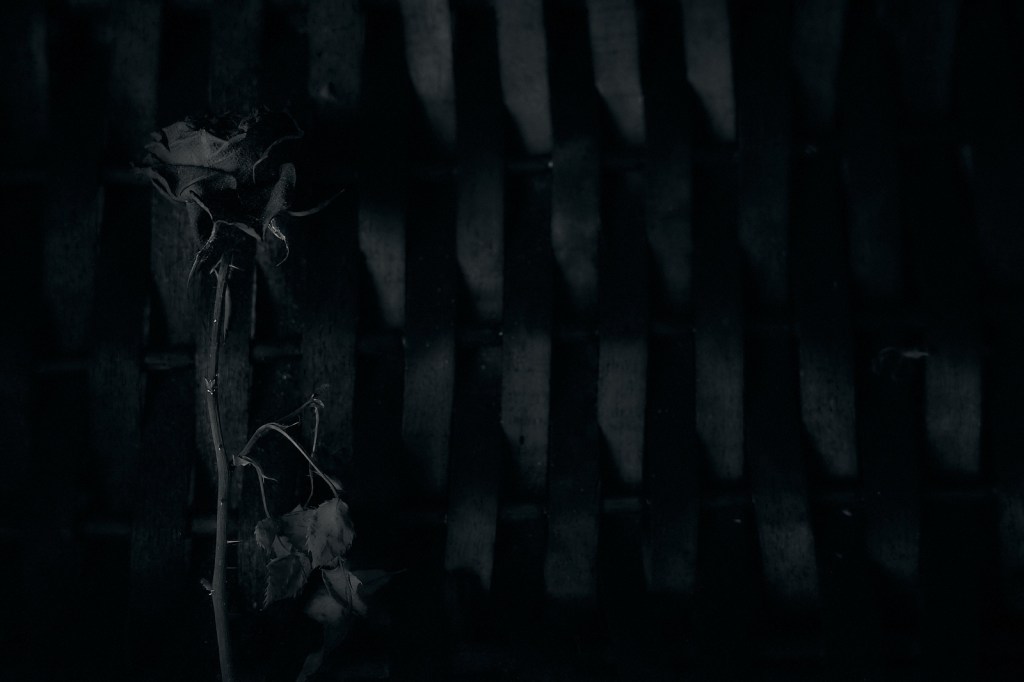
I chose to make this image unbalanced. Where you place something in the frame – to me – is just that, a choice, not a foregone conclusion.
Not to mention that these rules could be seen as particularly biased towards western culture. I’m becoming interested in researching whether these rules are embraced in other cultures. When I look at Japanese art for example I don’t really see this focus, or even when I look at different disciplines like cinematography, comic book art, graphic design ( which is heavily focussed on almost infinite numbers of different grid systems which could embody any set of fractions you want; as an ex-designer I think maybe this is why it makes me twitch when I hear the phrase).
Your creativity doesn’t have to be bound by mechanical rules. Make all of these choices for yourself, and your work will begin to become more distinctive. More a reflection of you and your view of the world.
 Photochronical